

How Much Do Pest Control Technicians Make?
The Bureau of Labor Statistics (BLS) counts employed pest control workers only, so the 5% of the trade who work for themselves are not in its pay figures. Where big companies pay commission or sales bonuses, BLS counts them as wages when the employer reports them. A one-person pest control business grosses more than the employee median, before chemicals, vehicle, insurance, license fees and tax.
We found no pest control technician or owner who published a full year's own income, so this page uses official figures, published prices and one company's job posting.
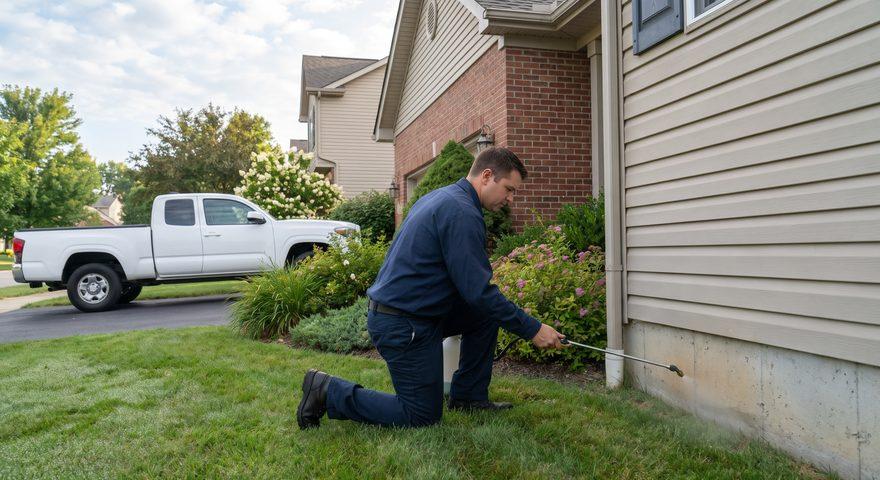
Which of these applies depends on how you earn: an hourly wage with sales bonuses, your own visit prices, or a crew.
Employed pest control workers in Seattle earn a median of $58,380, against $45,250 nationally
Every US ZIP code is matched. 323 of the 528 BLS areas publish a median for pest control workers; the other 205 show the state figure, and the tool says which. Census publishes one-person pest control receipts for only 1,109 counties, so the tool shows area pay, not a county line.
Sources: BLS OEWS May 2025, SOC 37-2021, by area, employees only, with the state figure shown where an area median is not published; Census Nonemployer Statistics 2024, NAICS 56171 by state, gross receipts before costs (Census publishes this industry at five digits; county figures exist for 1,109 counties and are not shown); the Census ZIP-to-county file; and USDA rural-urban codes. One step is modeled: no agency publishes self-employed pay by area, so the calculator applies the local pay level for employees to the price you enter. The lookup runs in your browser. It loads a small file for the first three digits of your ZIP code from this site and sends nothing else.
Washington pays employed pest control workers a median of $51,300; New Mexico pays $37,070
The table shows the national figure, the five highest and five lowest state medians, and the six states with the most people employed in the job. The first column counts employees only; the second is the average gross of one-person businesses before any costs.
| State | Employed pest control workers, median a year (BLS May 2025) | One-person pest control business, average gross (Census 2024) |
|---|---|---|
| United States | $45,250 | $56,468 |
| Highest five | ||
| Washington | $51,300 | $64,948 |
| South Dakota | $49,920 | $55,127 |
| Nevada | $49,240 | $52,661 |
| Connecticut | $49,010 | $80,057 |
| New Jersey | $48,780 | $66,657 |
| Lowest five | ||
| New Mexico | $37,070 | $53,901 |
| Mississippi | $37,200 | $46,115 |
| West Virginia | $37,510 | $57,292 |
| Texas | $37,660 | $55,453 |
| Arkansas | $37,710 | $46,387 |
| Most people employed in this job | ||
| Florida | $44,320 | $61,926 |
| Georgia | $37,860 | $52,810 |
| North Carolina | $44,740 | $49,350 |
| New York | $48,530 | $55,497 |
| Tennessee | $39,690 | $52,503 |
| Arizona | $44,430 | $70,968 |
First column: BLS OEWS May 2025 state medians for SOC 37-2021, employees only. Second column: Census Nonemployer Statistics 2024 average gross receipts for NAICS 56171, businesses with no paid employees, before chemicals, vehicle, insurance, license fees and tax. In Connecticut ($80,057) and New Hampshire ($97,596), the one-person gross average runs far above the employee median, though it is still before those costs.
A one-person pest control business grosses $56,468, above the $45,250 employee median
A wage is what an employer pays a technician, with sales bonuses inside it where they are paid. A price list shows what a company charges a customer, and the owner pays for chemicals, the vehicle, insurance and license fees out of that money. Here are both sides, from official figures, three companies' own price pages and one job posting.
NPMA's April 2026 release, from a survey of 800 company owners and managers by Specialty Consultants, puts the industry's service revenue at $13.416 billion in 2025, up 6% on $12.654 billion in 2024, across 16,565 firms, 81.4% of them with one or two locations, and an estimated 109,384 service technicians. By our arithmetic, that is about $122,600 of revenue per technician a year, before chemicals, vehicles, office staff and the owner are paid, and before any wage. It is not pay. What franchise owners and owners with crews take home is not public, so this page gives no figure for them.
Work out what a year of pest control visits brings in before chemicals and fuel
Put in your own price, visits, days and weeks. The defaults are examples, not measured figures, and the price comes from one company's published plan. Chemicals, vehicle, insurance and license fees are not taken out, so subtract your own costs from the result.
- Visit income in a year$69,000
- Your share$69,000
- Card fees− $2,070
Checked November 2026. Chemicals, vehicle, insurance and license costs are not deducted, so subtract your own. Visits, days and weeks are examples. With a ZIP code, the price follows that area's pay level.
Most states license pest control workers; Texas keeps a certified applicator on site three days a week
Licensing is the most-asked question we measured about pest control pay, so the rules sit here. These facts come from BLS and five state agency pages, read in November 2026. Rules differ by state, so check your own state's agency before you count on any of them.
The Occupational Outlook Handbook says "Most states require pest control workers to be licensed", and many employers also require a driver's license. The usual way in is a high school diploma and on-the-job training.
The Texas Department of Agriculture says "a certified applicator must be physically present at least three days a week". The certified applicator license costs $125, and continuing education is two general units plus one for each category, counted by calendar year.
In New York, an apprentice works under a certified commercial applicator employed by the same business. Commercial applicators and technicians then recertify with the state Department of Environmental Conservation every three years.
California's field representative exam application is $75 and the license application $45. Florida's business license is $300, and its operator certificate renews at $150 a year. Georgia's exam is $45 at technical colleges, and registration is $10.
The lowest-paid tenth of employed pest control workers earn under $34,680
BLS reports $34,680 a year at the 10th percentile and $37,440 at the 25th for employed pest control workers in May 2025, figures that leave out the self-employed. These low points of the range are the closest official figures to what a new technician is paid.
That is the BLS 25th percentile for May 2025. It counts employees only, not anyone who works for themselves.
BLS projects pest control jobs to grow 6% from 2025 to 2035, with about 13,700 openings a year. The Handbook counts 108,700 jobs in 2025, and 88% of pest control workers are in services to buildings and dwellings.
We read the post in an Internet Archive capture from July 2025, because the live page is gone. It listed "$16 - $20 an hour", a "$1,000 Sign-on bonus" and "Up to 300 dollars in bi-weekly bonuses". By our arithmetic, that hourly range over 2,080 hours comes to $33,280 to $41,600 a year before bonuses, around the BLS band from the 10th to the 25th percentile ($34,680 to $37,440). It is one office's opening, not what Aptive pays everywhere.
Both states let a new hire work under a certified applicator before they are certified themselves, so training happens on the job rather than in a school first.
Georgia's classroom training comes from a certified operator or an approved instructor, and until they register, a new worker must work in the presence of a registered employee, so they earn while they train.
Measured by us in November 2026. Training and courses were measured but left off the chart. Domain and email is the control row.
Pest control technician pay questions
If you run your own pest control route, let customers book and pay online between stops.
Set up your services and prices once, then share one booking link with every customer.
- A booking page that works as the link in your bio.
- Each service with its own length and price, like a quarterly service visit, a one-time treatment or a termite inspection.
- A deposit at booking, or a card on file for later.
- Tap to Pay on iPhone, to take a card in person.



Sources
Where every number on this page comes from, by publisher and date. Web pages were read in November 2026; the three price pages are each one company's own list, not a survey.
- Occupational Employment and Wage Statistics, May 2025: Pest Control Workers (37-2021), national, state and area, U.S. Bureau of Labor Statistics, 2026-05-15 Employees only; the self-employed are not surveyed. 323 of the 528 BLS areas publish a median for pest control workers; the other 205 show the state figure.
- Occupational Outlook Handbook: Pest Control Workers, U.S. Bureau of Labor Statistics, 2026-11-09 Jobs in 2025, the self-employed share, the outlook to 2035, entry requirements and the licensing quote.
- Nonemployer Statistics 2024: Exterminating and Pest Control Services (NAICS 56171), national and state, U.S. Census Bureau, 2026-09-29 Gross receipts of businesses with no paid employees, before chemicals, vehicle, insurance, license fees and tax. Census publishes this industry at five digits, the exact parent of 561710; county figures exist for 1,109 counties and are not shown.
- Occupations that customarily and regularly received tips on or before December 31, 2024, Internal Revenue Service, 2026-11-09 Pest control workers (SOC 37-2021) are not on the list.
- Pest control technician job posting, Pittsburgh, Pennsylvania, Aptive Environmental, 2026-11-09 Internet Archive capture, July 2025; the live posting is gone.
- News release on the 26th edition of A Strategic Analysis of the U.S. Structural Pest Control Industry, National Pest Management Association, 2026-11-09 Released April 2026; the analysis by Specialty Consultants surveyed 800 company owners and managers.
- How to become a Field Representative, California Structural Pest Control Board, 2026-11-09 Exam and license fees, the six-month exam window and when work can start; training hours are not on the page.
- Structural Pest Control Service: technician and apprentice licensing, Texas Department of Agriculture, 2026-11-09 Training hours, the supervision rule, the certified applicator fee and continuing education.
- Pest control licensing and certification, Florida Department of Agriculture and Consumer Services, 2026-11-09 Fees for the employee ID card, business license, operator exam and certificate renewal; training hours are not on the agency pages.
- How to become a certified commercial pesticide applicator or technician, New York State Department of Environmental Conservation, 2026-11-09 Apprentice age and supervision, instruction and experience hours, and the three-year recertification.
- Registered employee credential, Georgia Department of Agriculture, 2026-11-09 Classroom and on-the-job training hours, exam and registration fees, and the supervision rule.
- Pricing: plans, initial visits and one-time treatments, Green Pest Solutions, 2026-11-09 One company's own prices for Pennsylvania, New Jersey and Delaware.
- Pricing: quarterly plan and one-time treatment, SW Florida Pest Authority, 2026-11-09 One company's own prices, Fort Myers, Florida.
- Pricing: monthly plans, mosquito, bed bug and termite work, Akita Pest Control, 2026-11-09 One company's own prices, Lancaster, Pennsylvania.
- Stripe pricing, standard US card rate, Stripe, 2026-10-25 The card processor kiwilaunch uses; quoted for the 3% card fee in the calculator.
Not tax, legal or financial advice. Prices, pay and what you keep vary by state and city, licensing rules differ by state, and the tax rules on tips have conditions. A tax professional who knows your situation can answer for you.